
 Send Inquiry
 0804580023608045800236


 English
 Spanish
 French
 German
 Italian
 Chinese (Simplified)
 Japanese
 Korean
 Arabic
 Portuguese
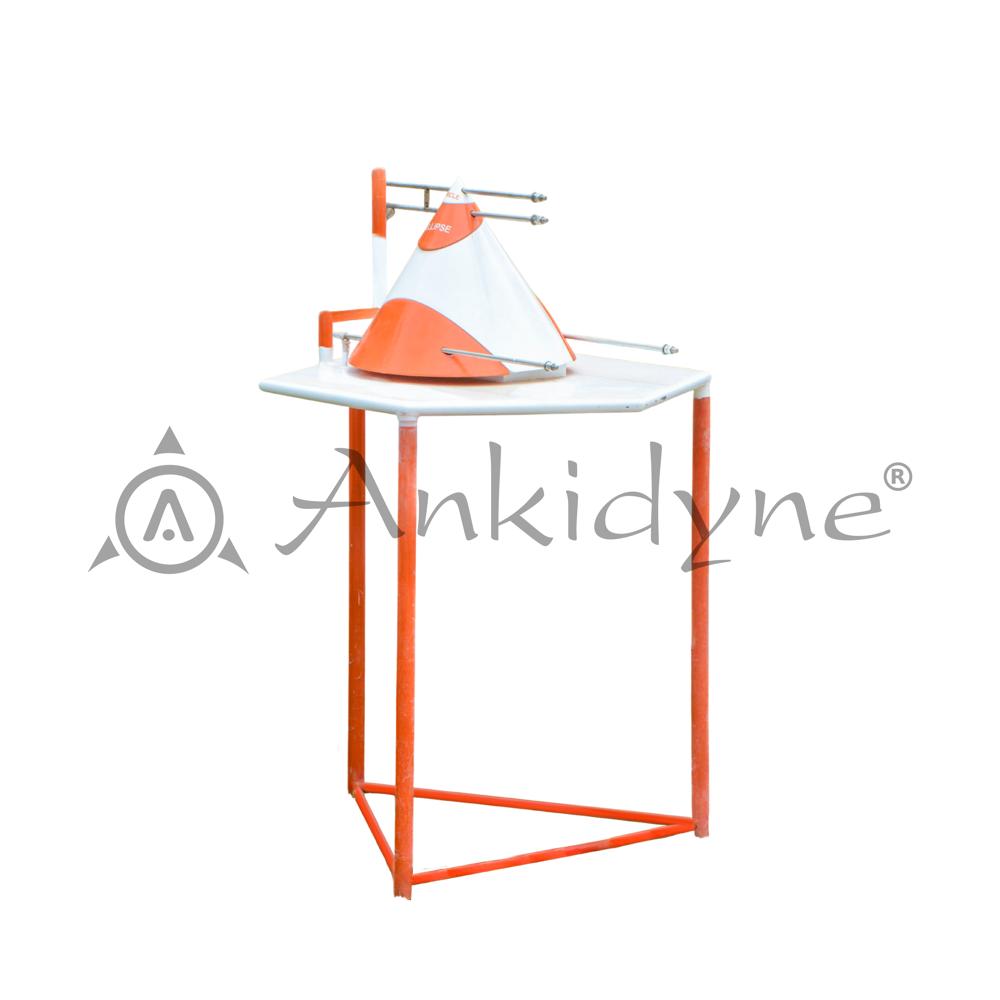
Conical Section
41653.0 INR/Piece
Product Details:
X
Conical Section Price And Quantity
- 41653.0 INR/Piece
- 4 Piece
Product Description
The Conic Sections Demonstration Model Exhibit a visually striking and highly educational outdoor mathematics teaching aid designed for science parks, STEM activity zones, schools, maths gardens, and children's science museums. This product features a large 3D cone model mounted on a triangular corner table top supported by orange and white MS pipe legs, with multiple adjustable metal cutting plane rods extending from the sides demonstrating how different cross-sectional cuts through a cone produce the four classic conic sections: Circle, Ellipse, Parabola, and Hyperbola.The labels "CIRCLE" and "ELLIPSE" are clearly visible on the cone model, with cutting plane indicators showing the angle and position of each cut making this a perfect hands-on outdoor mathematics exhibit for experiential learning.Tell us about your requirement

Price:
Quantity
Select Unit
- 50
- 100
- 200
- 250
- 500
- 1000+
Additional detail
Mobile number
Email

Other Products in 'Science Park Equipment' category

Contact Details

- No. 46, 1st Main Road, New Colony, Chromepet,Chennai - 600044, Tamil Nadu, India
- Phone : 08045800236
ANKIDYNE PLAYGROUND EQUIPMENTS & SCIENCE PARK
An ISO 9001 : 2015 Certified
An ISO 9001 : 2015 Certified

- Mr Padmanabhan A S (Marketing Director)
- Mobile : 08045800236
- info@ankidyne.com
- Fax : +91 44 66904488

|


 Send Inquiry
 Send SMS
 Call Me Free
ANKIDYNE SCIENCE PARK & PLAYGROUND EQUIPMENTS
All Rights Reserved.(Terms of Use)
Developed and Managed by Infocom Network Private Limited.
Developed and Managed by Infocom Network Private Limited.

