Product Description
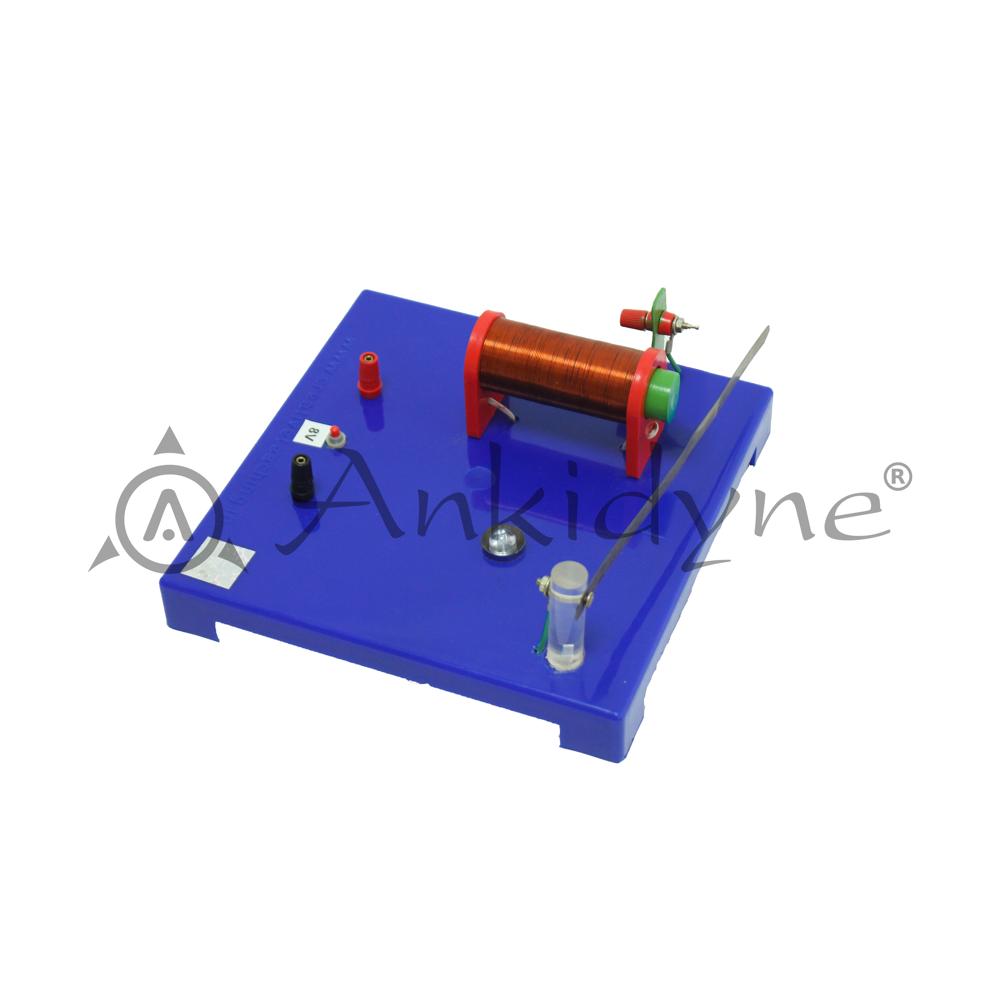
The Relay Circuit Model is a high-quality educational apparatus developed for demonstrating the operation of an electromagnetic relay. The model consists of a copper wire coil wound around an iron core, a movable armature, contact points, connection terminals, and a sturdy powder-coated metal base. When current flows through the coil, it generates a magnetic field that attracts the armature, opening or closing the electrical contacts. This experiment enables students to understand electromagnetic induction, switching mechanisms, and relay applications in electrical circuits.
Manufactured using premium-quality materials, the apparatus is durable, corrosion-resistant, and suitable for repeated classroom demonstrations and laboratory experiments.
Demonstrate Electromagnetism in ActionThis relay circuit apparatus allows clear demonstration of electromagnetic switching principles. The visible mechanical lever arm and flexible contacts show students how switching works within a relay, translating electrical current into mechanical motion. Its stable, non-slip base ensures safety and precision during classroom demonstrations and experiments.
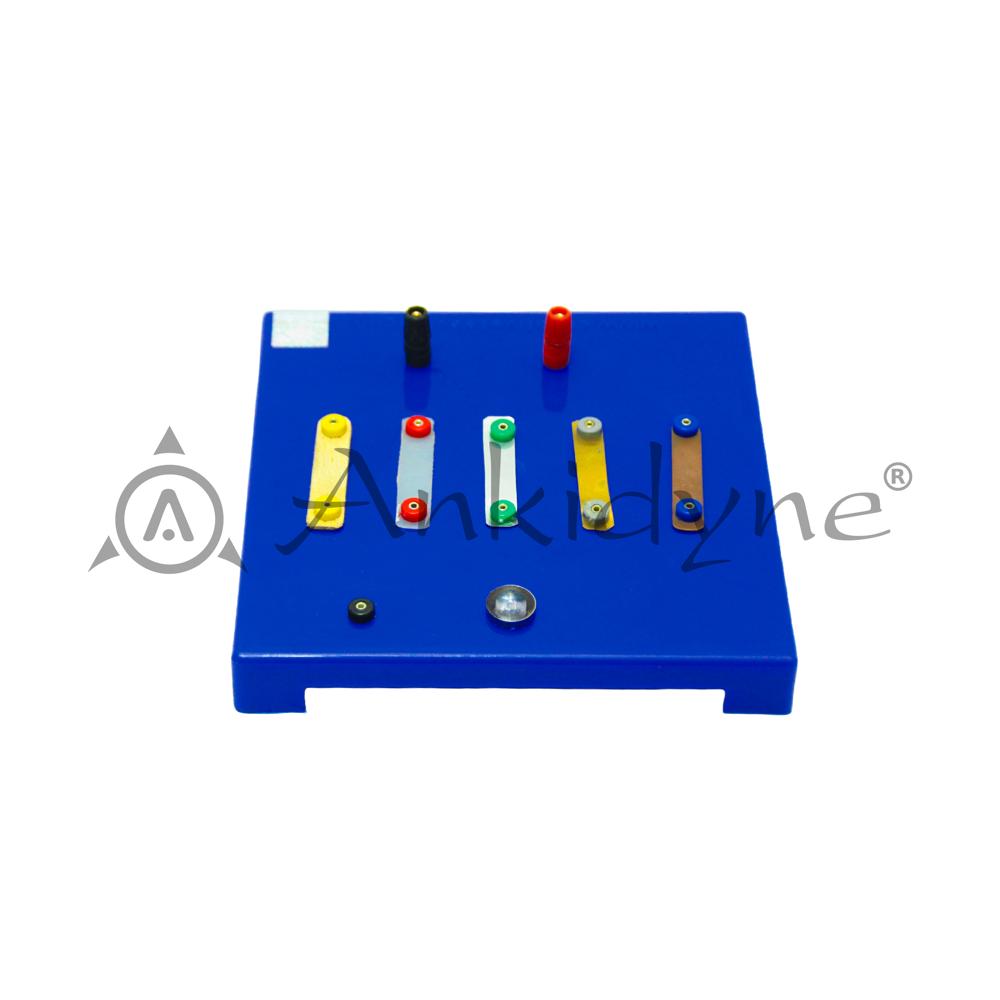
Flexible and Safe ConnectivityEquipped with 2mm/4mm banana plug sockets, connecting power sources or additional circuit elements is effortless and secure. This design consideration supports repeated use in educational environments and aligns with safety norms for science labs, making it suitable for group experiments and hands-on investigations.
FAQ's of Relay Circuit Physics Aids:
Q: How does the relay circuit aid demonstrate the principle of electromagnetic switching?
A: The apparatus features a copper coil that, when supplied with direct current (3V-12V), generates a magnetic field. This field moves the mechanical lever arm, closing or opening flexible contacts to switch circuits on or off. Students can visibly observe this process, helping them understand how relays function in electrical systems.
Q: What steps are involved in setting up and using this relay circuit aid in a lab experiment?
A: To set up the aid, connect a DC power supply (within 3V-12V) to the provided banana plug sockets. Secure the unit on a lab bench using the non-slip feet. Then, wire the circuit as required for your experiment, activate the supply, and observe the lever arm's movement as the current flows through the coil.
Q: When is it most beneficial to use this relay demonstration tool in physics classes?
A: The relay circuit aid is best used during lessons on electromagnetism, electrical circuits, or control systems. It is especially helpful when students are learning about how switches and relays operate, making theoretical concepts tangible through hands-on demonstration.
Q: Where should the relay circuit aid be positioned for optimal classroom use?
A: Place the apparatus on a stable, level surface such as a laboratory bench. Its non-slip feet ensure the relay remains stationary during demonstrations, allowing all students a clear view of its mechanical action and circuitry.
Q: What educational benefits does this relay circuit offer to middle and high school students?
A: The visual action of the mechanical lever arm, combined with easy connectivity and compliance with lab safety standards, provides a safe and effective way for students aged 12 and above to understand practical aspects of electromagnetic switches. This enhances their grasp of physics concepts and supports interactive learning.
Q: How can the relay circuit aid support group experiments or collaborative learning?
A: Thanks to its robust build and secure connections, the relay circuit aid is well-suited to group work. Multiple students can safely interact with the apparatus, wiring circuits and observing its operation together, encouraging teamwork and discussion of key electromagnetic concepts.