info@ankidyne.com
08045800236
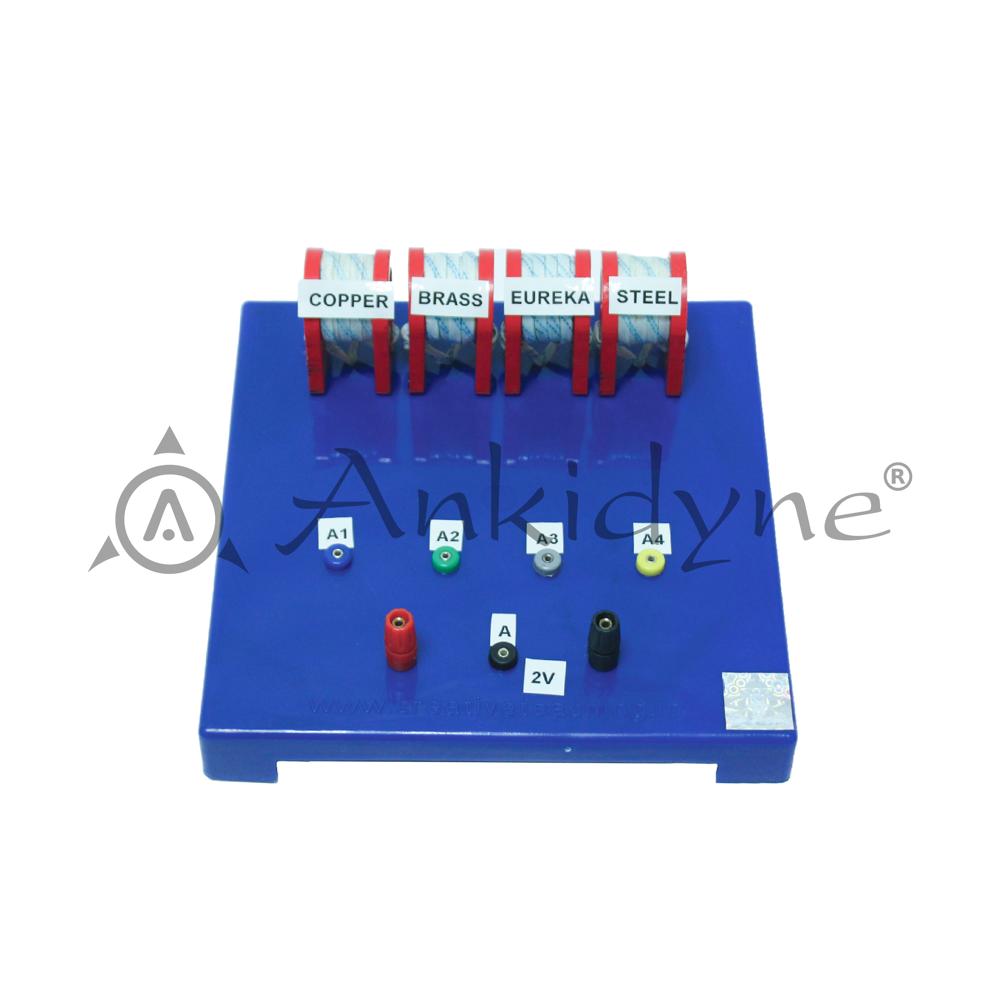
Variation of Resistance with Material model

Variation of Resistance with Material model

1555.0 INR/Piece

Product Details:

  • Power 2V DC (external supply required)
  • Age Group 12 years and above (suitable for school/college students)
  • Product Type Variation of Resistance with Material Model
  • Material Plastic base with spools of copper, brass, eureka, and steel wire
  • Color Blue base with multi-colored wire terminals and labels
  • Style Educational laboratory equipment
  • Dimensions Approx. 25 cm x 18 cm x 8 cm
  • Click to view more
X

Variation of Resistance with Material model Price And Quantity

  • 2 Piece
  • 1555.0 INR/Piece

Variation of Resistance with Material model Product Specifications

  • Variation of Resistance with Material Model
  • Blue base with multi-colored wire terminals and labels
  • Educational laboratory equipment
  • 2V DC (external supply required)
  • Plastic base with spools of copper, brass, eureka, and steel wire
  • Approx. 25 cm x 18 cm x 8 cm
  • Demonstrates the variation of electrical resistance with different wire materials
  • 12 years and above (suitable for school/college students)
  • Smooth-edged base, non-conductive construction to prevent electrical hazard
  • Clearly labeled for error-free connection and identification
  • Banana plug compatible sockets
  • Each material approx. 1 meter standard length
  • Long spools of copper, brass, eureka, and steel wire
  • 4 wire-specific terminals, 3 central posts for supply and measuring instruments
  • For physics lab experiments on resistance and material property study
  • Suitable for secondary school and undergraduate laboratory demonstrations
  • Approximately 800 grams
  • All components securely mounted on a finished plastic base

Product Description

The Variation of Resistance with Material Model is a precisely engineered physics teaching aid designed to experimentally demonstrate how electrical resistance varies depending on the material of the conductor, even when the length and cross-sectional area remain constant. This model enables students to practically verify that resistance is a material-dependent property governed by the resistivity of the conducting material a fundamental concept in Class 1012 physics under the topic of Electricity and Properties of Conductors.

Explore Resistance Variation Across Materials

This model enables students to investigate how electrical resistance changes with different conductive materials. By connecting each wire to supply and measuring instruments via banana plug terminals, users can measure resistance values for copper, brass, eureka, and steel. The color-coded terminals and detailed labeling minimize mistakes and streamline the learning process. The experiment promotes an understanding of material properties and their effect on electrical circuits in a practical, hands-on environment.


Engineered for Safety and Durability

Constructed with a finished plastic base and smooth edges, the unit is designed for safe classroom use. The non-conductive structure effectively mitigates the risk of electrical shock, while robust mounting keeps all components securely in place. The compact form factor (25 x 18 x 8 cm) and light weight (800 grams) ensure easy transport and setup without compromising stability or longevity during repeated experiments.

FAQ's of Variation of Resistance with Material model:


Q: How is the Variation of Resistance with Material model used in a lab experiment?

A: To use the model, connect the banana plug leads from your measuring instrument and 2V DC supply to the designated terminals. Select a spool of wire (copper, brass, eureka, or steel) and complete the circuit. Measure the resistance across each wire using an appropriate meter, and compare the values to observe differences caused by the material properties.

Q: What materials are included with this resistance model and why?

A: The model comes with 1-meter long spools of copper, brass, eureka, and steel wires. These materials are chosen for their varied electrical resistivities, enabling students to study and contrast how different substances affect resistance in conductors under similar conditions.

Q: When should I use this apparatus in my teaching curriculum?

A: This model is ideally integrated into lessons covering basic electricity, Ohm's Law, or material science. It's especially useful during units focused on electrical resistance, conductors, and the impact of material selection on circuit design. Best suited for students aged 12 and above, ranging from secondary school through undergraduate levels.

Q: Where is the ideal place to set up this equipment?

A: Place the model on a stable, dry lab bench, ensuring it is away from water sources or other conductive materials. This will minimize the risk of electrical hazards and provide a safe, organized environment for experimentation.

Q: What is the process for comparing resistance among the different wires?

A: First, connect one wire at a time to the circuitry using banana plugs and the corresponding terminals. Apply the recommended 2V DC external supply. Record the resistance reading for each material, then analyze the results to understand how wire composition influences the resistance value.

Q: How does this model benefit students studying physics?

A: It provides a practical, hands-on approach to understanding the theoretical concepts of resistance and material properties. By enabling safe, error-free experiments, students can directly observe real-world data, reinforcing their comprehension of the subject and encouraging critical analysis.

Q: What safety features are incorporated into this resistance model?

A: The plastic base is smooth-edged and non-conductive, minimizing the risk of accidental electric shocks. Components are securely mounted to prevent dislodgment during use, and all terminals are clearly labeled to aid correct connections.

Tell us about your requirement
product

Price:

Quantity
Select Unit

  • 50
  • 100
  • 200
  • 250
  • 500
  • 1000+
Additional detail
Mobile number

Email

Other Products in 'Teaching Aids' category


Back to top