info@ankidyne.com
08045800236
Wave Motion (oscillation)

Wave Motion (oscillation)

1566.00 INR/Piece

Product Details:

  • Power Not required (manual operation)
  • Age Group Educational (School & College Students)
  • Product Type Wave Motion Apparatus
  • Material Plastic rods, synthetic threads, metal fittings
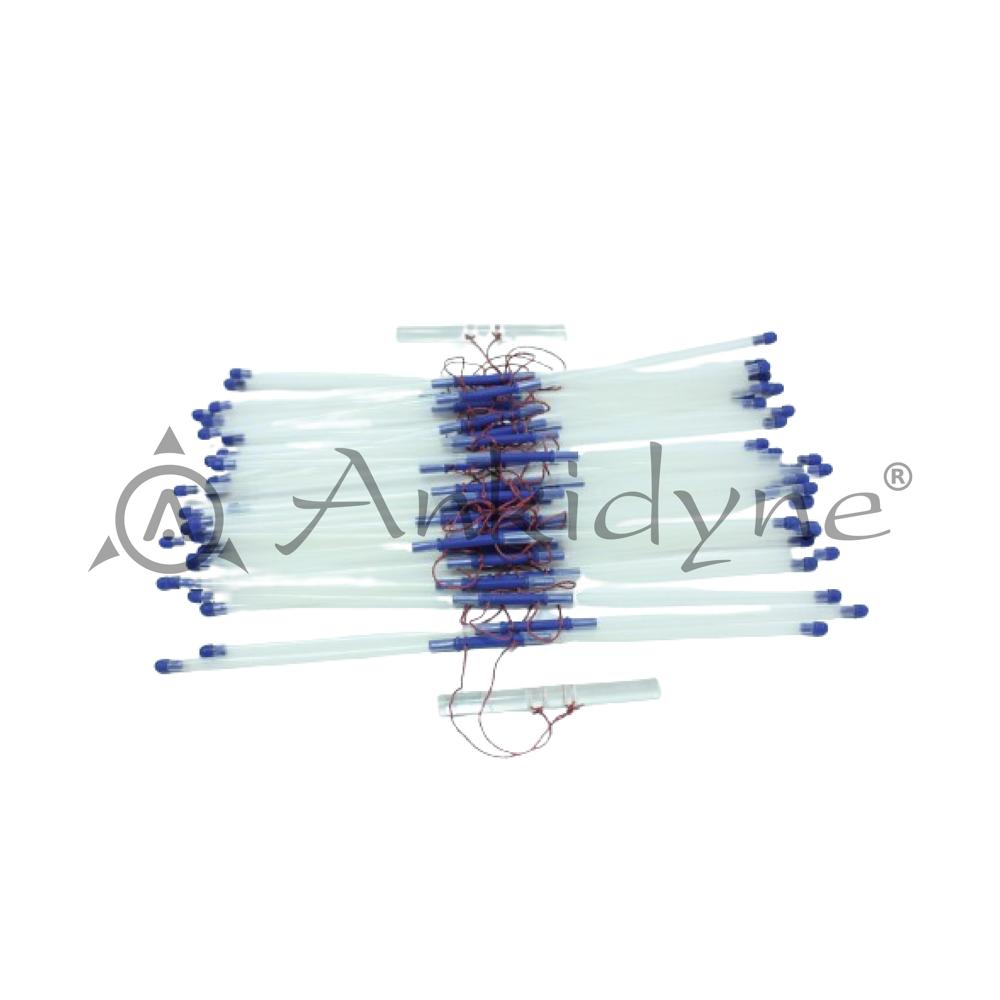
  • Color Transparent rods with blue end caps
  • Style Educational Physics Laboratory Equipment
  • Dimensions Approximately 60 cm x 30 cm (varies by model)
  • Click to view more
X

Wave Motion (oscillation) Price And Quantity

  • 1566.00 INR/Piece
  • 2 Piece

Wave Motion (oscillation) Product Specifications

  • Demonstrating wave motion and oscillation principles
  • Educational Physics Laboratory Equipment
  • Transparent rods with blue end caps
  • Wave Motion Apparatus
  • Approximately 60 cm x 30 cm (varies by model)
  • Not required (manual operation)
  • Educational (School & College Students)
  • Plastic rods, synthetic threads, metal fittings
  • Visual demonstration for classroom teaching
  • Physics laboratory demonstration of transverse wave motion, resonance, and oscillation
  • About 20-25 connected rods
  • Nylon / synthetic
  • Tabletop
  • Plastic, colored for visibility
  • Manual oscillation of end rods

Wave Motion (oscillation) Trade Information

  • 5-7 Days

Product Description

The Wave Motion (Oscillation) Demonstration Apparatus by Ankidyne is an educational physics teaching aid designed to demonstrate the principles of wave propagation, oscillation, and vibration. The apparatus enables students to observe how transverse and longitudinal waves travel through a medium, making complex wave concepts easy to understand through hands-on experimentation.

Ideal for Class 812 students, colleges, physics laboratories, STEM learning centers, and science exhibitions, this model promotes practical learning and enhances conceptual understanding of wave mechanics.


Visualizing Transverse Waves

This demonstration tool allows students to visually explore how waves propagate through a medium, using oscillating rods to model real-life wave behavior. The colored ends and transparent construction help clarify the concepts of wave crests, troughs, amplitude, and resonance in a classroom setting, fostering better comprehension for learners of all levels.


Robust and Safe Design for Classrooms

Crafted from durable plastic rods, synthetic threads, and strong metal fittings, the equipment provides a safe and reliable tool for repeated use in educational labs. The blue plastic end caps enhance visibility while also protecting users from sharp edges. Its manual operation ensures no electrical safety concerns and complete control during demonstrations.

FAQ's of Wave Motion (oscillation):


Q: How is the wave motion apparatus used during classroom demonstrations?

A: The device is operated by manually oscillating one of the end rods, which sends a visible transverse wave through the connected array. This allows students to observe the wave's travel, the effects of different frequencies, and the phenomena of resonance directly.

Q: What educational benefits does the apparatus offer for teaching wave motion and oscillation?

A: It provides a hands-on visual representation, enhancing students' understanding of complex physics concepts such as wave propagation, amplitude, frequency, and resonance, which can be difficult to grasp through theoretical explanation alone.

Q: When should this apparatus be incorporated into the curriculum?

A: The wave motion model is best introduced during lessons on physical waves, oscillations, and resonance-typically in middle school, high school, or introductory college physics courses focusing on fundamental wave mechanics.

Q: Where is the apparatus typically setup for demonstrations?

A: Its compact tabletop design is tailored for use in classroom and laboratory settings, fitting easily onto standard laboratory benches or classroom tables for convenient group viewing.

Q: What is the process for demonstrating resonance with this apparatus?

A: Resonance can be demonstrated by oscillating the end rod at specific frequencies to create standing waves, where certain rods move with greater amplitude. This helps illustrate the concept of natural frequencies in a tangible way.

Q: What makes the colored plastic end caps important in this model?

A: The colored blue end caps improve the visibility of the rods' motion, allowing students from different viewing angles to easily follow the displacement and understand the properties of the wave.

Tell us about your requirement
product

Price:

Quantity
Select Unit

  • 50
  • 100
  • 200
  • 250
  • 500
  • 1000+
Additional detail
Mobile number

Email

Other Products in 'Teaching Aids' category


Back to top